Starting or running a business brings a stream of financial questions that rarely have simple answers. How much money do you actually need? Which type of funding suits your business? How do you tell the difference between having cash in the bank and being profitable? This guide answers those questions in plain English, built specifically for UK business owners who want a practical starting point rather than a textbook.
By the end of this guide, you will understand what business finance means, the main funding options available in the UK, how to build a working budget, and the financial habits that keep a business alive during its hardest years.
What Is Business Finance?
Business finance is any money that comes into a business from a source other than its own trading revenue. This includes loans, investment, grants, and asset finance, as well as the internal practice of planning, tracking, and managing the money a business already has. In short, business finance covers two connected areas: how a business raises money, and how it manages that money once it has it.
Many guides only cover the first half of that definition. This one covers both, because a business that raises finance without knowing how to manage it rarely survives long enough to benefit from the funding at all.
Why Business Finance Matters for Every UK Business
Roughly half of the limited companies registered in the UK stop trading within five years. The common assumption is that these businesses fail because they are unprofitable, but that is not usually the full story. A large proportion close because they run out of cash, even while technically profitable on paper. Understanding business finance is not an optional extra for accountants. It is one of the core skills that decides whether a business survives its early years.
Cash vs Profit: The Difference Every Business Owner Must Understand
Cash is the money physically available in your business bank account, while profit is the surplus left after subtracting costs from revenue on paper. A business can be profitable and still run out of cash if customers pay late, stock ties up funds, or large expenses fall due before income arrives. This gap between profit and cash is one of the most common reasons growing businesses get into difficulty, even when demand for their product or service is strong.
A simple way to remember it: profit is an opinion, cash is a fact. Profit depends on accounting decisions such as when you recognise income or depreciate an asset. Cash simply is or is not in your account.
Types of Business Finance Available in the UK
UK businesses can draw on several distinct categories of finance. Each suits different situations, and most growing businesses end up using more than one over time.
Debt Finance
Debt finance means borrowing money that must be repaid, usually with interest. This includes business loans, overdrafts, and government-backed lending schemes. It suits businesses with predictable income that can commit to regular repayments without giving up ownership.
Equity Finance
Equity finance involves selling a share of your business to an investor in exchange for capital. Angel investors and venture capital firms fall into this category. Unlike a loan, there is no fixed repayment, but you give up part ownership and, usually, some control. Presenting your numbers and vision clearly matters enormously here. If you are preparing to approach investors, it is worth reading our guide on building a polished and persuasive investor pitch, alongside the most frequent pitch mistakes that cost entrepreneurs funding.
Asset Finance
Asset finance allows a business to spread the cost of equipment, vehicles, or machinery over time, either through leasing or hire purchase, rather than paying the full amount upfront. This preserves cash for other priorities while still allowing the business to use the asset it needs.
Invoice Finance
Invoice finance releases cash tied up in unpaid customer invoices, typically by borrowing against them or selling them to a finance provider. This is particularly useful for businesses that offer 30 or 60 day payment terms but need cash sooner to cover wages and stock.
Grants and Non-Repayable Funding
Grants do not need to be repaid, which makes them attractive, but they are usually competitive, sector specific, and tied to strict conditions. UK and European schemes exist across sectors including green technology and innovation. Our guide to European funding for business, with grants up to €10m, is a useful next step if grant funding fits your situation, and our piece on low carbon business opportunities for cleantech startups covers sector specific options for green businesses.
Bootstrapping and Self-Funding
Bootstrapping means funding the business from personal savings, early revenue, or founder contributions rather than external finance. It keeps full ownership and control with the founder, though it usually means slower growth and more personal financial risk.
Which Type of Finance Suits Your Business?
| Finance Type | Repayment Required | Ownership Impact | Best Suited To |
|---|---|---|---|
| Debt Finance (loans, overdrafts) | Yes, with interest | None | Businesses with predictable, regular income |
| Equity Finance (investors) | No fixed repayment | Partial ownership given up | High growth businesses seeking large capital |
| Asset Finance | Yes, spread over time | None | Businesses needing equipment or vehicles |
| Invoice Finance | Repaid as invoices settle | None | Businesses with slow paying customers |
| Grants | No | None | Businesses matching specific scheme criteria |
| Bootstrapping | No external repayment | Full ownership retained | Early stage businesses with modest capital needs |
How to Choose the Right Business Finance Option
There is no single correct answer here, but a few questions narrow the decision quickly:
- Do you need the money for a one-off cost, such as equipment, or for ongoing working capital?
- Can your business commit to fixed monthly repayments without strain?
- Are you willing to give up part ownership in exchange for a larger amount of capital?
- Does your business or sector qualify for any grant schemes?
- How quickly do you need the funds?
Most established businesses use a mix of finance types rather than relying on a single source, matching each type of funding to the specific need it serves.
Building a Business Budget That Actually Works
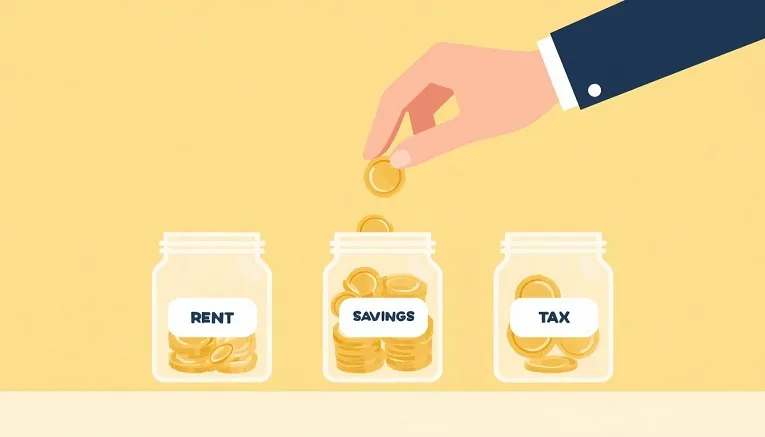
A budget is simply a plan for where money will come from and where it will go over a set period, usually a month or a year. A working budget for a small business typically separates costs into three groups: fixed costs that stay the same regardless of sales, such as rent, variable costs that rise and fall with activity, such as materials, and one-off costs, such as new equipment.
Once these are mapped against expected income, most business owners find at least one cost they can trim without affecting quality, and at least one gap between when money goes out and when it comes in, which is worth planning around in advance. For a full step by step walkthrough, see our guide on how to create a business budget that works.
Managing Cash Flow: The Number One Reason Businesses Fail
Cash flow is the movement of money in and out of a business over time. A cash flow forecast, even a simple one built in a spreadsheet, shows you weeks or months in advance where a shortfall might occur, giving you time to act before it becomes a crisis. Practical habits that protect cash flow include invoicing promptly, following up on late payments quickly, negotiating longer payment terms with suppliers where possible, and keeping a cash buffer for slow months.
Understanding Your Core Financial Statements
Three documents form the backbone of business financial management. You do not need to be an accountant to read them, but understanding what each one tells you is essential.
Profit and Loss Statement
This shows income, costs, and the resulting profit or loss over a set period, usually a month, quarter, or year. It answers the question: is the business making money?
Balance Sheet
This is a snapshot of what the business owns, what it owes, and the difference between the two, taken at a single point in time. It answers the question: what is the business actually worth right now?
Cash Flow Statement
This tracks the actual movement of cash in and out of the business. It answers the question that a profit and loss statement cannot: does the business have enough cash to pay its bills?
Common Business Finance Mistakes to Avoid
- Confusing profit with available cash, and spending accordingly
- Underestimating how long customers will actually take to pay
- Taking on debt without a clear plan for repayment
- Mixing personal and business finances
- Waiting until a cash shortage happens instead of forecasting it in advance
- Applying for finance without comparing more than one provider or option
A Simple Financial Health Checklist for New Business Owners
- Open a dedicated business bank account, separate from personal finances
- Build a basic monthly budget covering fixed, variable, and one-off costs
- Create a rolling three month cash flow forecast and update it monthly
- Review your profit and loss statement at least monthly
- Keep a cash buffer equivalent to at least one month of fixed costs where possible
- Compare at least two finance options before committing to either
Where to Get Business Finance Advice in the UK
Independent, impartial guidance is available free of charge through government backed bodies such as the British Business Bank and local growth hubs, alongside professional advice from a qualified accountant, which is particularly valuable once your business finances become more complex. Comparing options with a professional before committing to a loan, investment, or grant application is generally worth the time it takes.
Frequently Asked Questions
What is the difference between business finance and personal finance?
Business finance concerns money raised and managed within a company, while personal finance concerns an individual’s own income, savings, and spending. Mixing the two makes it far harder to see the true financial health of a business.
How much finance does a new business actually need?
This depends on your startup costs, how long it will take to become profitable, and how much of a cash buffer you want. A common approach is to calculate your fixed monthly costs, multiply by the number of months you expect before reaching profitability, and add a buffer of at least 10 to 20 percent for unexpected costs.
Can a profitable business still fail?
Yes. A profitable business can still fail if it runs out of cash, for example when customers pay late or too much money is tied up in stock or unpaid invoices. This is why cash flow management matters as much as profitability.
What is the easiest type of business finance to get as a beginner?
There is no universally easiest option, since eligibility depends on your business type, trading history, and credit profile. Bootstrapping avoids external approval entirely, while asset finance and invoice finance are often more accessible to newer businesses than unsecured loans or equity investment.
Do I need an accountant to manage business finance?
Not always in the earliest stages, but most business owners benefit from at least periodic accountant input once trading becomes more complex, particularly around tax, financial statements, and larger finance applications.
Final Thoughts
Business finance is not a single decision made once at the start of a company’s life. It is an ongoing set of choices about how money is raised, tracked, and protected. Getting the basics right, understanding your finance options, building a workable budget, and watching cash flow closely, gives any UK business a stronger foundation to grow from. Over the coming weeks, this site will build out detailed guides on each of the topics introduced here, from business budgeting to investment and startup funding, so bookmark this page as your starting point.
About the Author
This guide is produced by the editorial team at Riser, covering practical business finance, investment, and entrepreneurship topics for UK founders and business owners.
About the Author