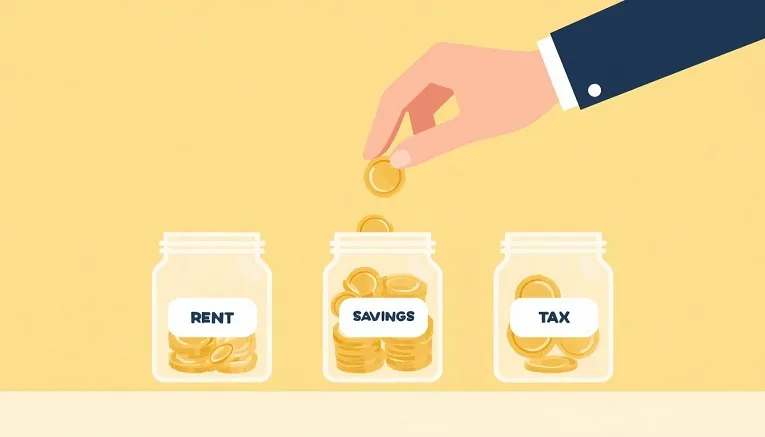
A business budget is often the first financial document a new business owner is told to create, yet it is also one of the most commonly skipped. Many small businesses run for months on instinct alone, only building a budget once cash gets tight. This guide walks through how to build a business budget that actually gets used, rather than one that is created once and forgotten in a spreadsheet folder.
If you are still working out what your costs will be in the first place, our guide to the cost of starting a business in the UK walks through typical startup costs by business type.
If you are new to business finance more broadly, our complete guide to business finance for beginners is a useful starting point before working through the steps below.
What Is a Business Budget?
A business budget is a financial plan that sets out expected income and expenses over a defined period, usually a month, quarter, or year. It compares what a business expects to earn against what it expects to spend, showing the likely surplus or shortfall in advance rather than after the fact. Unlike a forecast, which simply predicts what is likely to happen, a budget is a target the business actively works towards.
Why Small Businesses Need a Budget
A budget gives a business owner early warning of problems before they become serious. Rather than discovering a cash shortage when a payment bounces, a well-maintained budget flags the issue weeks in advance, giving time to act. Beyond damage control, budgeting supports better day-to-day decisions, including pricing, hiring, and when to invest in growth, and it makes conversations with lenders or investors considerably more credible, since it demonstrates financial discipline rather than guesswork.
Getting prices right is one of the highest leverage decisions you can make, which is why our guide to how to price products as a small business in the UK pairs so well with this one.
Fixed Costs, Variable Costs, and One-Off Costs
Every business budget rests on three categories of cost.
Fixed Costs
Fixed costs stay broadly the same each month regardless of how much you sell. Rent, insurance, and salaried wages are typical examples.
Variable Costs
Variable costs rise and fall with activity. Raw materials, hourly wages, and delivery costs typically fall into this category.
One-Off Costs
One-off costs are irregular and tied to specific events, such as new equipment, a rebrand, or a one-time legal fee.
Separating costs this way makes it far easier to see which expenses are genuinely fixed obligations and which ones can be adjusted if income falls short.
How to Create a Business Budget: Step by Step
Step 1: Total Your Expected Income
List every source of income the business expects over the period, including product or service sales, and any secondary income such as interest or grants. Where income is uncertain, use a conservative estimate rather than an optimistic one.
Step 2: List Every Cost
Pull together fixed, variable, and one-off costs using real figures from bank statements and accounting records wherever possible, rather than rough guesses. The more accurate the inputs, the more useful the finished budget becomes.
Step 3: Set Aside Money for Tax
Income tax, corporation tax, and VAT obligations should be budgeted for from the outset rather than treated as an afterthought. A common approach is to move a fixed percentage of income into a separate account as it arrives, so the tax bill never comes as a surprise.
Step 4: Build in a Contingency Buffer
Unexpected costs are close to guaranteed at some point during the year. Setting aside a percentage of income, commonly somewhere between 5 and 10 percent, as a contingency buffer protects the budget from being derailed by a single unplanned expense.
Step 5: Compare Income Against Costs
Subtract total costs from total expected income. A positive figure indicates a planned surplus, while a negative figure signals that either costs need to be reduced or income needs to increase before the period begins.
Knowing your break-even point makes this comparison far more meaningful. Our guide to break-even analysis for small business shows how to calculate the minimum monthly revenue you need.
Step 6: Review and Adjust Regularly
A budget that is three months out of date offers little practical guidance. Reviewing monthly against actual figures, and adjusting where reality has moved away from the plan, is what separates a useful budget from a document that is built once and ignored.
Budgeting Methods Compared
| Method | How It Works | Best Suited To |
|---|---|---|
| Zero-Based Budgeting | Every expense must be justified from zero each period, rather than carried over from the last | Businesses wanting tight cost control |
| 50/20/30 Rule | 50 percent essentials, 20 percent savings and contingency, 30 percent growth or discretionary spend | Simpler businesses wanting a quick guideline |
| Rolling Budget | Continuously updated, adding a new period as each one ends | Businesses in fast-changing markets |
| Static Annual Budget | Set once for the full year and reviewed at year end | Stable businesses with predictable income |
Choosing the Right Budgeting Period
A business budget can cover anything from a single month to a full year. Shorter periods suit businesses with unpredictable income or seasonal swings, since they allow for more frequent course correction. Longer, annual budgets suit more established businesses with stable, predictable income, though even these benefit from a monthly review against actual figures.
Tools for Building and Managing a Budget
A simple spreadsheet is sufficient for many early stage businesses and costs nothing to set up. As a business grows, dedicated accounting software becomes worthwhile, since it pulls real transaction data directly into reports, reducing manual error and saving time compared with updating a spreadsheet by hand.
Common Budgeting Mistakes to Avoid
- Estimating income optimistically rather than conservatively
- Forgetting to budget for tax and VAT obligations
- Mixing personal and business spending, which makes tracking inaccurate
- Building the budget once and never reviewing it again
- Leaving no contingency buffer for unexpected costs
- Ignoring seasonal patterns in income or spending
A Simple Business Budgeting Checklist
- List all expected income sources using conservative estimates
- Separate costs into fixed, variable, and one-off categories
- Set aside a fixed percentage of income for tax
- Add a contingency buffer of 5 to 10 percent
- Calculate the expected surplus or shortfall for the period
- Schedule a monthly review against actual figures
Business Budget Template: Copy This Structure
If you are staring at a blank spreadsheet, start with the structure below. It covers the income and cost categories most UK small businesses need, and you can delete the rows that do not apply to you. Figures are an illustrative example for a small service business, not a benchmark.
| Category | Budgeted (monthly) | Actual (monthly) | Difference |
|---|---|---|---|
| Sales income | £6,000 | ||
| Other income | £200 | ||
| Rent and premises | £800 | ||
| Salaries and wages | £2,200 | ||
| Materials and stock | £900 | ||
| Marketing | £250 | ||
| Software and subscriptions | £120 | ||
| Insurance | £80 | ||
| Professional fees | £150 | ||
| Tax set aside | £600 | ||
| Contingency buffer | £400 | ||
| Planned surplus | £700 |
Adapt it to your business by adding the rows that reflect how you actually spend. A product business will want lines for delivery and packaging. A freelancer will want a line for subcontractor costs. Review the template in your first monthly review and rename any row that feels vague. A budget you understand at a glance is a budget you will keep using.
Frequently Asked Questions
What should a small business budget include?
A small business budget should include all expected income, fixed costs, variable costs, one-off costs, a tax allowance, and a contingency buffer, compared against each other to show the likely surplus or shortfall for the period.
How often should a business budget be reviewed?
Most small businesses benefit from reviewing their budget monthly against actual income and costs, adjusting projections where real figures have moved away from the original plan.
What is the difference between a budget and a forecast?
A forecast predicts what is likely to happen based on current trends, while a budget is a target the business actively plans and works towards, often built using the forecast as a starting point.
Is a spreadsheet enough for small business budgeting?
A spreadsheet is often sufficient for early-stage businesses with straightforward finances. As transaction volume grows, dedicated accounting software typically becomes more efficient and accurate.
Final Thoughts
A business budget is only useful if it gets reviewed and adjusted as reality unfolds. Building one is a straightforward, six-step process, but the real value comes from treating it as a living document rather than a one-time exercise. Once your budget is in place, the next priority is understanding how cash actually moves through your business day to day, which our business finance for beginners guide covers in more depth.
About the Author